Swiss Housing Scarcity: The 10-Year Record Low in Homes on the Market
Swiss Housing Scarcity: The 10-Year Record Low in Homes on the Market
Posted by

Related reading
5% Over CHF 5 Million: National Inheritance Tax Reloaded
5% Over CHF 5 Million: National Inheritance Tax Reloaded
The 10 Million Limit: UBS Analyzes the Real Estate Impact
The 10 Million Limit: UBS Analyzes the Real Estate Impact
Swiss Real Estate 2026: Growth Amidst Stability
Swiss Real Estate 2026: Growth Amidst Stability
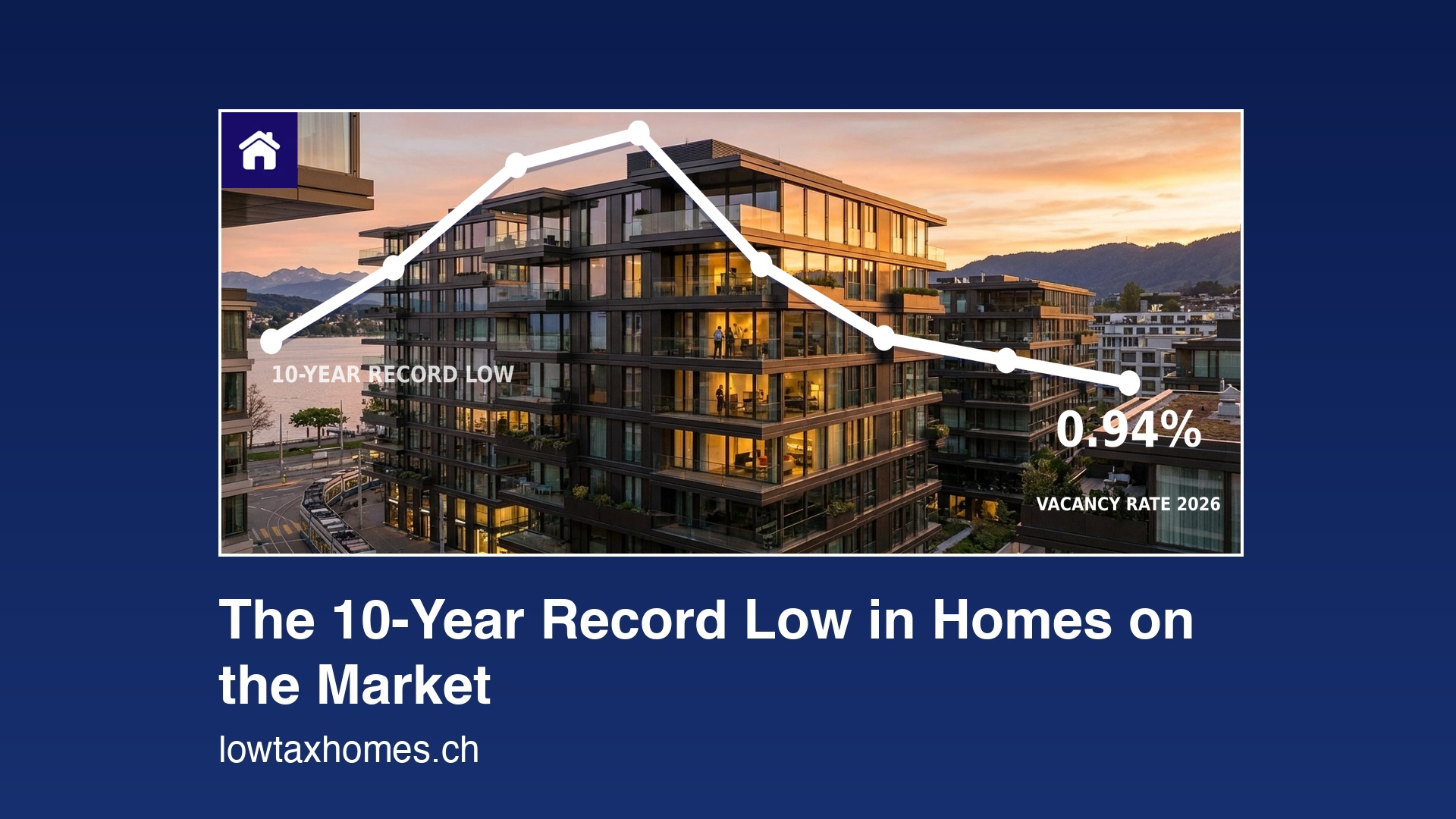
Finding a home in Switzerland has reached a level of difficulty not seen in over a decade. According to a recent report by 20 Minuten, based on the latest Housing Market Monitor from the Federal Office of Housing (BWO), the nationwide vacancy rate has plummeted to a historic low. This unprecedented supply-demand imbalance acts as a powerful catalyst for value, particularly in strategic low-tax regions.
The 10-Year Record Low: A Visual Reality
The transition from the peak availability of 2020 to the near-total absorption of 2026 is one of the most significant shifts in modern Swiss economic history.
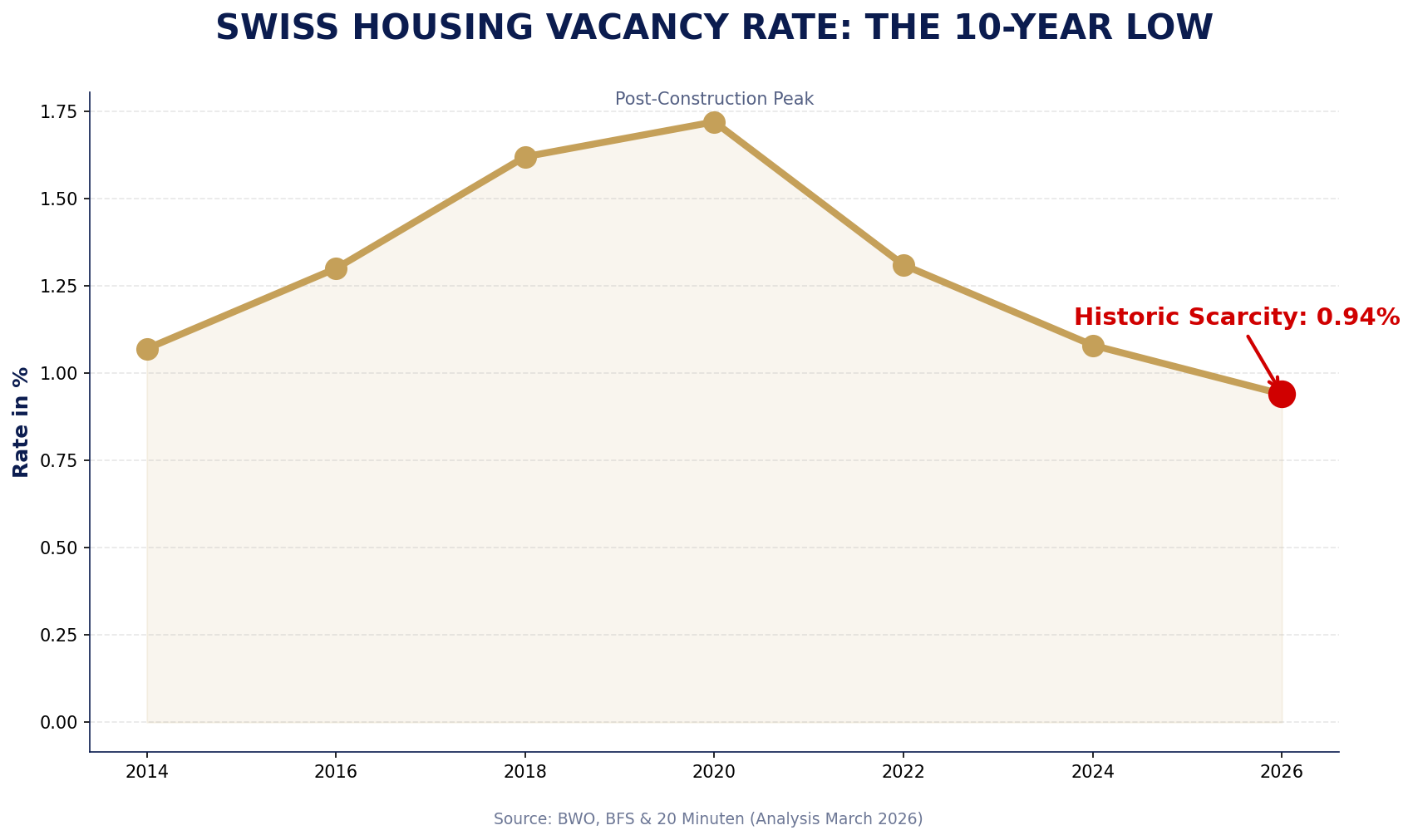
Fig 1: The Swiss Vacancy Rate (Leerwohnungsziffer) Trend. At 0.94%, the market has surpassed the critical scarcity threshold. Data benchmarked from BWO and BFS sources.
Understanding the Leerstandsquote
The Leerstandsquote (vacancy rate) serves as the primary pulse of the real estate market. It measures the percentage of immediately available housing units relative to the total stock. Economists generally consider a rate of 1.5% to be a healthy "equilibrium" that allows for social and economic mobility. At the current 0.94%, the market is effectively frozen.
As reported by 20 Minuten, this scarcity is particularly acute in high-demand economic and lifestyle hubs. The regions identified as being at the forefront of this 10-year low include Zurich, Zug, and Geneva, alongside primary alpine destinations like St. Moritz and Chur, and the central hub of Lucerne. For households with low to middle purchasing power, the barriers to entry have become insurmountable, while the premium segment continues to see intensive competition for the few remaining high-quality assets.
Regional Hotspots: Zurich, Zug, and Geneva
While the national average is at a 10-year low, the pressure in the most attractive economic centers is significantly more intense. Data from the BFS and BWO confirms that Zug and Zurich are operating at vacancy levels that indicate an almost total drying up of the housing market.
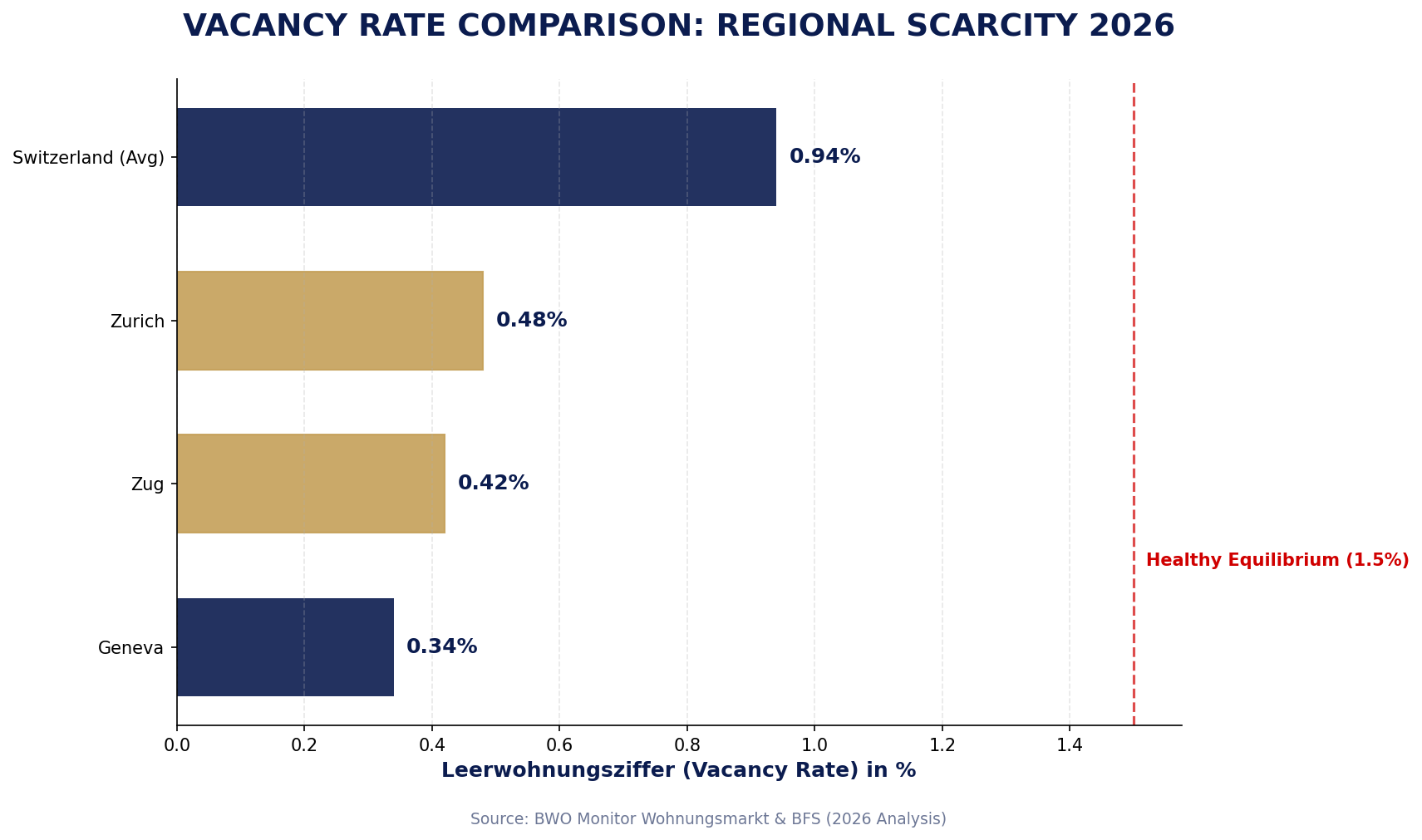
Fig 2: Regional Vacancy Rate Comparison (2026). Zurich (0.48%) and Zug (0.42%) are far below the national average and the healthy equilibrium of 1.5%. Data based on the latest BWO Housing Market Monitor.
Strategic Implications for Low-Tax Regions
The housing shortage acts as an unshakable floor for property values. In the "Winners Cantons" of Zug and Schwyz, the "Lowtax Advantage" creates a unique decoupling effect:
1. Quality Migration: High-income professionals continue to cluster in ZG and SZ, keeping demand insulated from broader economic cycles.
2. The 6:1 Barrier: With property prices often exceeding six times the average annual income, the existing inventory in low-tax zones becomes an elite sanctuary for capital preservation.
3. Rental Resilience: With vacancy rates well below 1%, rental stability is virtually guaranteed, positioning residential investments in these regions as some of the safest assets in Europe.
At Lowtaxhomes, we monitor these structural shifts to ensure our clients are positioned at the top of the scarcity curve. In a market where supply is exhausted, location remains the only true leverage.
---
Secure Your Position in the Low-Tax Market
The demographic momentum of Switzerland is undeniable. Whether you are looking for a strategic primary residence or a high-yield investment, positioning yourself in the right municipality today defines your financial legacy.
Join Lowtaxhomes today to receive exclusive access to premium listings and expert tax insights before the market moves.
👉 Register for Property Alerts
👉 Explore Premium Listings
---
Low-tax cantons
26 listings added in the low-tax cantons this week
Free alerts from 130+ agencies — matched to your budget, location and property type. Only sent when something new appears.
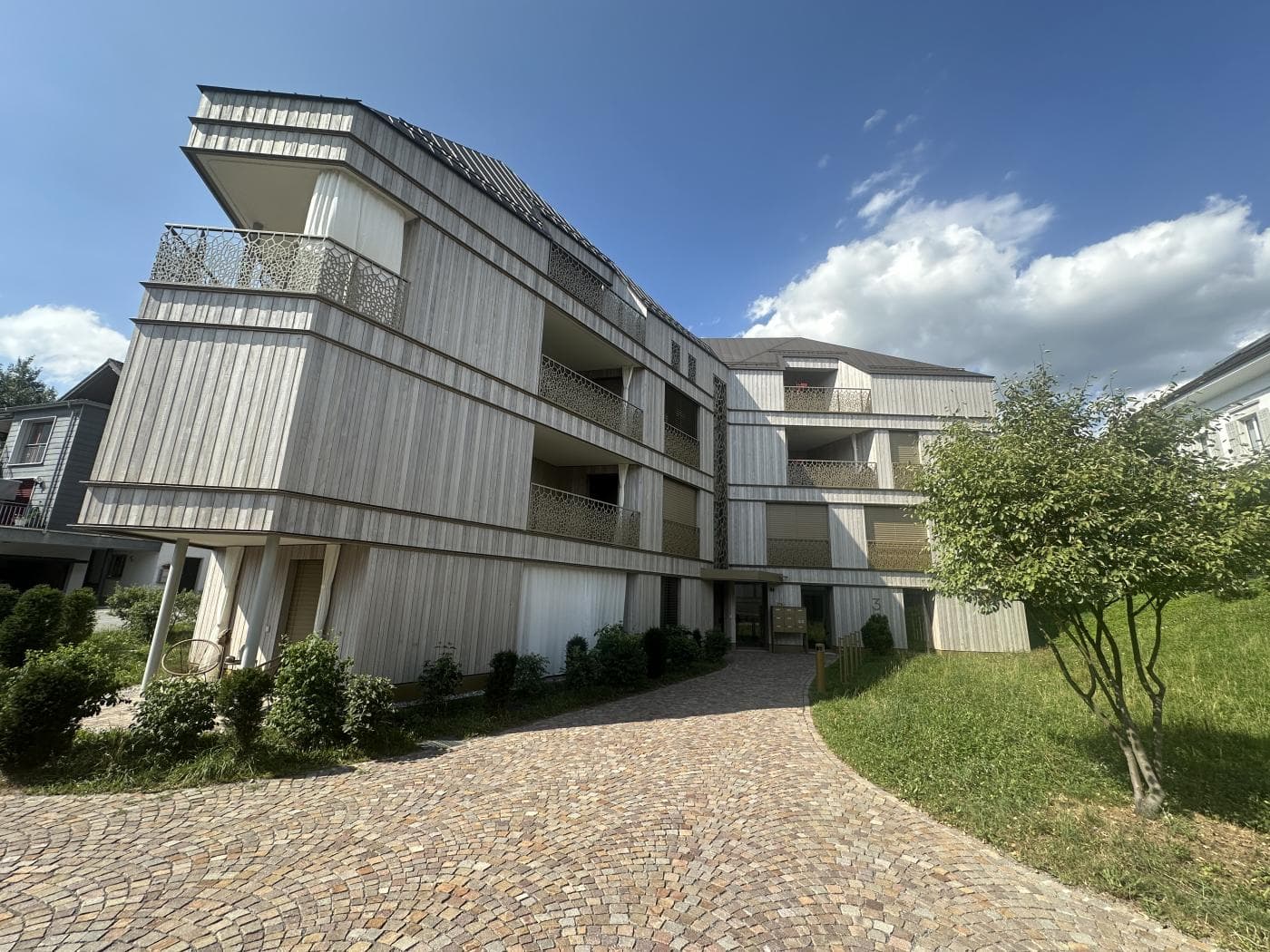
Einzigartige 4.5 Zimmer-Maisonette-Wohnung
Schöne 3.5-Zimmerwohnung mit Balkon

Traumhafte Attikawohnung mit Berg- & Seesicht
No credit card • No spam • Cancel anytime
